
Concrete Contractors of Sherman
Heavy-Duty Loading Docks concrete service

Industrial & Infrastructure

Heavy-Duty Loading Docks

Dock aprons, truck courts, and pit construction that integrate with high-volume distribution yards.

We plan, engineer, and execute heavy-duty loading docks across North Texas industrial, commercial, and municipal job sites. Our team coordinates design, logistics, and QA so every placement supports the overall critical path of your project.

loading docktruck courtdock apron
  • Heavy-duty paving, containment, and crane foundations
  • 24/7 shutdown crews and mission-critical sequencing
  • QA/QC reporting aligned to industrial specifications
ACI | PTI crews24/7 mobilizationQA/QC reports
Loading...

About Heavy-Duty Loading Docks

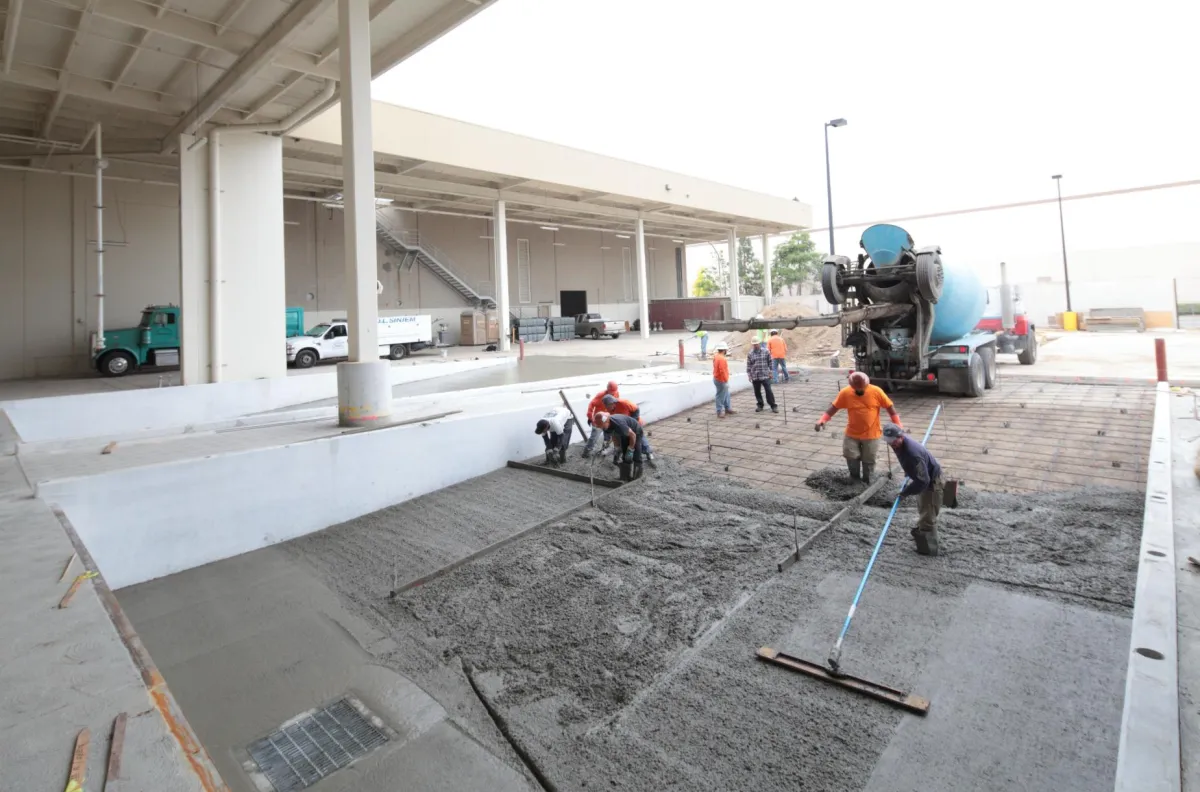
Heavy-duty loading docks represent critical infrastructure components facilitating efficient material handling and truck access in distribution centers, warehouses, and logistics facilities throughout Sherman, TX and the greater North Texas region. Dock aprons, truck courts, and pit construction require comprehensive engineering addressing high-volume distribution operations, heavy-duty design requirements, and integration with warehouse floor systems. Our expertise encompasses complete loading dock construction designed to accommodate high-frequency truck traffic while maintaining structural integrity and operational efficiency. Dock aprons serve as the interface between truck beds and warehouse floors, requiring durable concrete systems capable of withstanding heavy truck loads, impact forces, and continuous traffic operations. Apron design incorporates thickness requirements typically ranging from 8 to 12 inches, depending on truck loading, soil conditions, and operational demands. Reinforcement strategies include welded wire fabric or rebar grids to enhance structural capacity and control cracking under demanding conditions. Surface finish requirements create appropriate texture for truck traction while maintaining durability under heavy use. Truck courts encompass the paved areas surrounding loading docks where trucks maneuver, park, and access dock positions. These areas require heavy-duty concrete paving capable of withstanding continuous truck traffic, turning movements, and operational wear. Court design addresses adequate width for truck maneuvering, proper drainage slopes, and integration with site utilities. Thickness requirements typically range from 8 to 10 inches, with reinforcement providing enhanced structural capacity for heavy-duty applications. Pit construction serves dock leveler systems requiring below-grade installations integrated with warehouse floors. Pit construction requires careful excavation, structural concrete placement, and integration with adjacent floor systems. Structural design addresses loads from dock levelers, truck impacts, and operational forces while maintaining waterproofing and drainage functionality. Pit dimensions must accommodate dock leveler equipment while providing adequate clearance for operation. High-volume distribution yards create exceptional demands on loading dock infrastructure, requiring systems designed for continuous operations and minimal maintenance. These applications demand loading docks capable of accommodating frequent truck arrivals and departures while maintaining structural integrity and operational efficiency. Design considerations include adequate dock capacity, efficient traffic flow, and integration with material handling systems. Construction execution must accommodate operational phasing to minimize disruption while maintaining safety and quality standards. Heavy-duty design requirements for loading docks incorporate comprehensive analysis addressing truck loading, impact forces, and operational frequency. Design considerations include maximum truck weights, axle configurations, and impact loading from truck docking operations. Structural capacity must accommodate these loads while maintaining serviceability and durability throughout extended service life. Reinforcement strategies enhance structural performance under demanding conditions. Drainage integration represents critical design consideration for loading dock areas where water management prevents operational disruptions and maintains safety. Drainage systems include surface slopes directing water away from dock areas, subsurface drainage preventing water accumulation, and integration with site drainage infrastructure. Proper drainage prevents ice formation, maintains traction, and protects against water-related deterioration. Integration with warehouse operations requires careful coordination ensuring that loading dock construction accommodates material handling systems, storage configurations, and operational requirements. Dock positions must align with warehouse layouts, accommodate material handling equipment, and support efficient loading and unloading operations. Construction phasing coordinates with warehouse operations to minimize disruption while maintaining operational continuity. Construction execution for heavy-duty loading docks requires precise surveying, proper site preparation, and careful material placement operations. Site preparation includes grading, compaction, and installation of base course materials where required. Concrete placement operations utilize appropriate equipment to achieve specified thickness, reinforcement placement, and surface finish. Quality control measures include concrete testing, thickness verification, and inspection programs ensuring compliance with specifications. Performance requirements for loading docks encompass structural capacity, surface durability, and operational functionality. Structural performance must accommodate truck loads and impact forces while maintaining integrity throughout extended service life. Surface durability requires resistance to abrasion, impact, and wear under continuous traffic operations. Operational functionality ensures that docks support efficient material handling while maintaining safety and reliability. Maintenance considerations for heavy-duty loading docks focus on surface condition, joint management, and addressing localized deterioration before it compromises operational functionality. Regular inspection programs assess surface condition, joint functionality, and areas requiring attention. Preventive maintenance activities including joint resealing and surface treatments extend service life and maintain performance. Repair procedures address localized issues while maintaining overall dock functionality. Heavy-duty loading docks provide essential infrastructure enabling distribution centers, warehouses, and logistics facilities to achieve operational objectives requiring efficient truck access and material handling. Our expertise with dock aprons, truck courts, and pit construction enables us to deliver loading dock systems meeting demanding operational requirements. Whether serving high-volume distribution operations or standard warehouse applications, properly designed and constructed loading docks create critical infrastructure supporting operational efficiency and facility success throughout Sherman, TX and the greater North Texas region.

Related Services

Explore connected scopes or search the catalog.

Warehouse Floor Systems

High-performance warehouse slabs with joint strategies that support logistics and cold storage operations.

View service

Site Paving & Concrete Roads

Heavy-duty concrete paving programs for industrial yards, access roads, and distribution corridors.

View service

Industrial Flatwork

Laser-guided flatwork placements built to support racking, robotics, and high-cycle traffic.

View service
Concrete Retaining Walls

Engineered retaining and MSE wall solutions that manage grade changes around municipal and commercial sites.

View service

Frequently Asked Questions

How do you design heavy-duty loading docks to handle high-volume truck traffic in Sherman, TX distribution centers?

Designing heavy-duty loading docks to handle high-volume truck traffic in Sherman, TX distribution centers requires comprehensive engineering analysis addressing truck loading, operational frequency, and structural requirements. Our design process begins with detailed traffic analysis evaluating truck types, loading frequencies, and operational patterns specific to distribution operations. Dock apron design incorporates thickness requirements typically ranging from 8 to 12 inches, depending on truck loading and soil conditions, with reinforcement strategies including welded wire fabric or rebar grids to enhance structural capacity. Truck court design addresses adequate width for maneuvering, proper drainage slopes, and heavy-duty paving capable of withstanding continuous truck traffic. Design considerations include maximum truck weights, axle configurations, and impact loading from truck docking operations. Structural capacity must accommodate these loads while maintaining serviceability and durability. Drainage systems prevent water accumulation and maintain safe operating conditions. Integration with warehouse operations ensures that dock positions align with material handling systems and support efficient loading operations. The resulting loading dock systems in Sherman, TX distribution centers accommodate high-volume truck traffic while maintaining structural integrity and operational efficiency throughout extended service life.

What thickness and reinforcement are required for loading dock aprons in Denison, TX industrial facilities?

Loading dock apron thickness and reinforcement requirements in Denison, TX industrial facilities depend on truck loading, soil conditions, and operational demands. Typical thickness requirements range from 8 to 12 inches, with 10 to 12 inches commonly specified for heavy-duty applications accommodating frequent heavy truck traffic. Thicker sections may be required for poor soil conditions or exceptionally heavy loading conditions. Reinforcement strategies typically include welded wire fabric or rebar grids designed to enhance structural capacity and control cracking under demanding conditions. Standard reinforcement may utilize #4 or #5 rebar placed in a grid pattern, or welded wire fabric meeting specified requirements. Reinforcement design considers truck loading, impact forces, and operational frequency to ensure adequate structural performance. Concrete specifications typically require minimum 3000 to 4000 psi compressive strength, with higher strengths specified for particularly demanding applications. Proper subgrade preparation and base course materials provide critical support, requiring proper compaction and material quality. Surface finish requirements create appropriate texture for truck traction while maintaining durability under heavy use. These thickness and reinforcement requirements ensure that Denison, TX industrial facility loading dock aprons withstand heavy truck loads, impact forces, and continuous traffic operations while maintaining structural integrity throughout extended service life.

How are loading dock pits constructed and integrated with warehouse floors in McKinney, TX?

Loading dock pit construction and integration with warehouse floors in McKinney, TX requires careful planning, precise construction execution, and coordination with adjacent floor systems. Pit construction begins with precise excavation to specified dimensions accommodating dock leveler equipment while providing adequate clearance for operation. Excavation must achieve proper depth and dimensions while maintaining alignment and elevation consistency. Structural concrete placement creates pit walls and floor capable of accommodating loads from dock levelers, truck impacts, and operational forces. Reinforcement strategies include rebar grids providing structural capacity and crack control. Waterproofing systems prevent water infiltration that could compromise pit functionality or adjacent warehouse floors. Drainage systems integrate with pit construction to manage water effectively. Integration with warehouse floors requires careful coordination ensuring that pit edges align properly with adjacent floor systems, maintaining elevation consistency and structural continuity. Joint construction at pit perimeters accommodates movement while maintaining structural integrity. Surface finish requirements create appropriate texture for equipment operation while maintaining durability. Quality control measures include concrete testing, dimensional verification, and inspection programs ensuring compliance with specifications. Coordination with dock leveler installation ensures proper fit and operation. The resulting pit construction in McKinney, TX warehouses integrates seamlessly with warehouse floors, providing reliable dock leveler operation while maintaining structural integrity and operational efficiency.

Do you provide loading dock construction for high-volume distribution and logistics facilities in Dallas-Fort Worth, TX?

Yes, we provide comprehensive loading dock construction services for high-volume distribution and logistics facilities throughout the Dallas-Fort Worth metroplex. Our capabilities encompass heavy-duty dock aprons, truck courts, and pit construction designed to accommodate high-frequency truck traffic and demanding operational conditions. We serve facilities requiring loading docks capable of handling continuous truck arrivals and departures while maintaining structural integrity and operational efficiency. Our engineering expertise addresses truck loading, impact forces, and operational frequency to develop appropriate designs meeting demanding requirements. Construction capabilities include site preparation, concrete placement, reinforcement installation, surface finishing, and pit construction. We construct dock aprons with thickness typically ranging from 8 to 12 inches, incorporating appropriate reinforcement for heavy-duty applications. Truck court construction provides heavy-duty paving capable of withstanding continuous truck traffic and turning movements. We coordinate effectively with facility operators, project managers, and dock leveler manufacturers to ensure proper integration and operation. Our experience with DFW distribution and logistics facilities includes understanding operational requirements, accommodating phasing needs, and delivering loading dock systems that support efficient material handling. We serve clients throughout the metroplex, providing loading dock construction solutions that meet demanding operational requirements and support long-term operational success for high-volume distribution and logistics facilities in Dallas-Fort Worth, TX.

Ready to schedule heavy-duty loading docks?

Share your drawings, soils data, and schedule details. Our engineering and field leaders will prepare a concrete delivery plan tailored to your site.

  • • Plan review and value engineering prior to mobilization
  • • Full logistic planning, pumps, cranes, and finishing crews
  • • QA documentation plus daily reporting for stakeholders
Call NowGet Free Quote