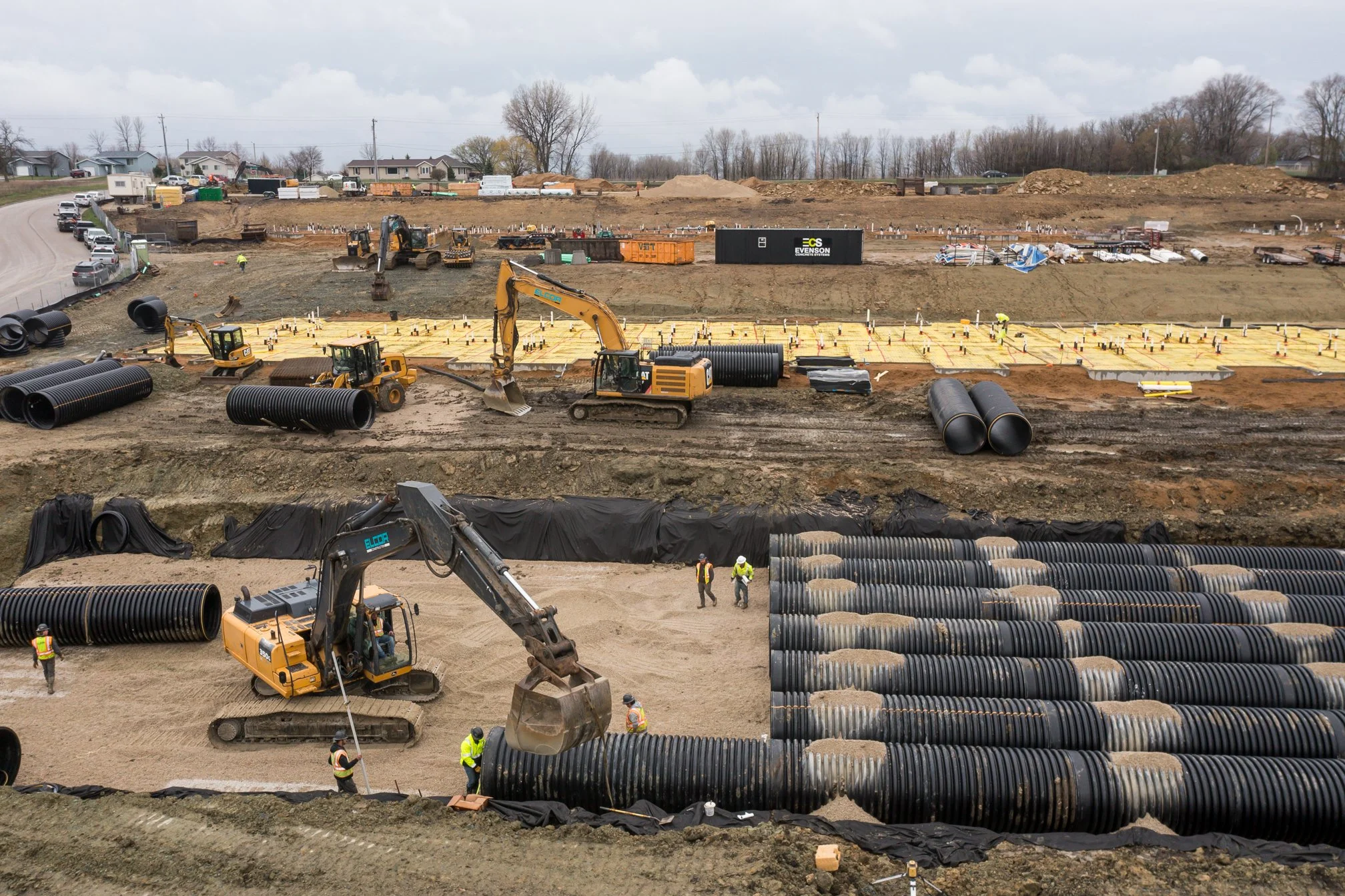
About Earthwork & Site Grading
Earthwork and site grading services provide essential foundation preparation for commercial and industrial development throughout Sherman, TX and the greater North Texas region. Mass excavation, precision grading, and balance plans create properly prepared sites that support structural concrete placements, paving operations, and facility construction. Our comprehensive earthwork expertise encompasses commercial site preparation, structural concrete placement preparation, grading specifications, compaction requirements, and site development coordination that ensures optimal subgrade conditions for North Texas construction projects.
Mass excavation operations involve extensive earthmoving activities that reshape site topography to meet design requirements for commercial and industrial developments. Excavation scope ranges from shallow cuts for building pads to deep excavations for basements and foundations. Mass excavation in Sherman, TX commercial projects removes unsuitable materials, adjusts elevations, and creates proper slopes for drainage and functionality. Equipment selection considers excavation volumes, material types, and site constraints to optimize efficiency and cost-effectiveness.
Grading represents the precision shaping of site topography that establishes proper elevations, slopes, and drainage patterns for commercial developments. Grading operations create building pads, parking areas, and site features with specified elevations and tolerances. Precision grading ensures that subsequent construction phases proceed efficiently with minimal adjustments. Commercial grading in North Texas accounts for expansive soil conditions, drainage requirements, and structural foundation needs.
Balance plans optimize earthwork efficiency by matching cut and fill volumes to minimize material import or export requirements. Balance analysis evaluates existing topography, design elevations, and material characteristics to create efficient earthwork strategies. Balance plans reduce construction costs by utilizing on-site materials effectively. Commercial balance planning for Sherman, TX developments minimizes hauling expenses and environmental impacts while meeting design requirements.
Commercial site preparation encompasses comprehensive earthwork activities that ready properties for development, including clearing, grubbing, excavation, grading, and compaction. Site preparation creates stable foundations for buildings, roads, utilities, and landscaping. Commercial preparation in North Texas addresses expansive soils, drainage integration, and coordination with utility installations. Proper site preparation ensures that subsequent construction phases proceed smoothly and efficiently.
Structural concrete placement preparation involves specific earthwork activities that create optimal subgrade conditions for concrete foundations, slabs, and structural elements. Subgrade preparation includes excavation to specified depths, removal of unsuitable materials, and placement of select fill. Compaction requirements ensure stable support for concrete structures. Structural preparation in Sherman, TX accounts for expansive soil mitigation, drainage integration, and foundation load requirements.
Grading specifications establish precise requirements for elevation control, slope design, and surface tolerances that ensure proper site functionality and drainage. Specifications address building pad elevations, parking area slopes, and drainage swale profiles. Tolerances ensure that constructed grades meet design intent while accommodating construction practicalities. Commercial grading specifications in North Texas consider regional soil conditions and climate factors.
Compaction requirements ensure that compacted earthwork provides stable, uniform support for structures and pavements. Compaction specifications include density requirements, moisture content controls, and testing procedures that verify proper earthwork performance. Compaction efforts address North Texas expansive soils through proper moisture conditioning and density achievement. Structural foundation support requires carefully controlled compaction to prevent settlement and support loads.
Site development coordination integrates earthwork activities with utility installations, building construction, and landscaping to create cohesive commercial environments. Coordination ensures that excavation and grading accommodate utility trenches, building foundations, and site features. Phased construction approaches manage earthwork efficiency while supporting overall project schedules. Commercial site development requires careful sequencing to optimize costs and timelines.
North Texas soil conditions significantly influence earthwork and grading operations, with expansive clays, variable moisture content, and seasonal movement requiring specialized techniques. Expansive soil mitigation includes moisture conditioning, removal of problematic materials, and placement of select fill. Grading designs account for soil expansion potential and drainage needs. Compaction operations address moisture-sensitive materials common throughout Sherman, TX.
Construction methodologies for earthwork and grading include traditional excavation equipment, laser-guided grading systems, and innovative techniques like GPS-controlled operations. Equipment selection considers project size, material characteristics, and precision requirements. Laser-guided systems ensure accurate elevation control. GPS technology provides efficient mass earthwork coordination.
Quality assurance programs for earthwork and grading include density testing, elevation surveys, and material verification that ensure constructed work meets specifications. Proctor density tests verify compaction achievement. Elevation surveys confirm grade accuracy. Material testing ensures appropriate fill characteristics. Quality control documentation supports construction approval and warranty requirements.
Economic considerations for earthwork and grading balance excavation costs with fill requirements and hauling expenses. Balance plans minimize material import/export through efficient cut/fill matching. Equipment selection optimizes production rates and fuel consumption. Cost management considers material availability, disposal requirements, and site access constraints.
Environmental considerations for earthwork and grading address erosion control, stormwater management, and material handling that protect natural resources. Erosion control measures prevent soil loss during construction. Stormwater management directs runoff appropriately. Material handling addresses contamination prevention and disposal requirements.
Technology integration enhances earthwork and grading precision through advanced design tools, equipment automation, and quality monitoring systems. Building Information Modeling (BIM) supports comprehensive site planning. GPS-guided equipment ensures accurate grading. Digital documentation tracks progress and quality.
Regulatory compliance ensures that earthwork and grading meet municipal codes, environmental requirements, and safety standards. Permitting processes address excavation limits, drainage plans, and erosion control. Inspection coordination ensures installations meet approval standards.
Professional expertise in earthwork and grading encompasses engineering design, construction management, and quality assurance capabilities. Licensed professional engineers provide design and specification development. Certified technicians ensure proper material testing and compaction verification. Project managers coordinate complex commercial developments.
Future developments in earthwork and grading focus on advanced equipment, sustainable practices, and enhanced precision. Autonomous machinery, soil stabilization technologies, and real-time monitoring represent emerging capabilities. Our commitment to innovation ensures ongoing improvement in site preparation services.
Community impact of earthwork and grading extends to economic development and infrastructure reliability, providing essential site preparation that supports commercial activity. Well-prepared sites enhance property values and construction efficiency.
Sustainability initiatives integrate environmental responsibility with earthwork objectives, using efficient techniques and material management that minimize ecological impact. On-site material utilization, erosion prevention, and water management support green initiatives.
Innovation in earthwork and grading embraces emerging technologies that improve efficiency and precision. Automated grading systems, advanced compaction methods, and performance monitoring enhance service quality. Technological advancement ensures consistent results and optimal site preparation.
Legacy planning ensures that earthwork and grading create lasting site improvements that support long-term commercial development. Proper preparation preserves property values and operational continuity. Strategic planning aligns site work with facility growth patterns.
Performance monitoring for earthwork and grading establishes metrics for site preparation effectiveness and identifies opportunities for continuous improvement. Settlement monitoring, density verification, and performance data inform future practices. Data-driven approaches ensure optimal site preparation.
Integration with concrete construction creates comprehensive site development systems that optimize cost and performance. Earthwork preparation ensures proper subgrade conditions for concrete placements. Coordinated development enhances construction efficiency.
Emergency preparedness considerations ensure that earthwork and grading support disaster response and recovery operations. Rapid site preparation restores critical access. Resilient grading withstands extreme weather events.
Education and training maintain high standards for earthwork and grading execution through ongoing professional development. Crew training emphasizes safety procedures, equipment operation, and quality control. Knowledge advancement supports consistent performance.
Measurement and verification systems provide objective assessment of earthwork and grading quality, ensuring work meets specifications and provides expected foundation support. Advanced testing equipment verifies density, elevation, and material properties. Verification processes support construction approval and warranty requirements.
Seasonal considerations affect earthwork and grading timing throughout North Texas, with optimal operations occurring during moderate weather conditions. Moisture content management addresses seasonal variations. Weather monitoring prevents work during adverse conditions.
Material selection for earthwork considers suitability, availability, and performance requirements. Select fill materials provide appropriate support characteristics. Material testing ensures compliance with specifications. Material optimization ensures appropriate performance for specific applications.
Vendor coordination for earthwork and grading involves working with material suppliers, equipment manufacturers, and testing laboratories to ensure comprehensive service delivery. Supplier partnerships provide access to quality materials and technical support. Equipment maintenance ensures reliable operations.
Documentation and record-keeping for earthwork and grading provide essential records for construction approval, regulatory compliance, and property management. As-built surveys, material certifications, and quality data support long-term facility management.
Market analysis for earthwork and grading considers regional trends, equipment innovations, and regulatory changes that influence service delivery. Industry research informs equipment selection and construction methodologies. Market awareness ensures competitive, effective site preparation.
Cost management strategies for earthwork and grading optimize resource allocation while maintaining quality standards. Budget planning considers equipment costs, material needs, and labor requirements. Value engineering identifies opportunities to enhance performance without increasing expenses.
Customer service excellence in earthwork and grading involves responsive communication, reliable scheduling, and quality-focused execution that builds long-term client relationships. Service coordination ensures minimal disruption to adjacent properties. Follow-up support addresses performance concerns.
Industry partnerships for earthwork and grading create collaborative opportunities that enhance service capabilities and market reach. Association memberships provide access to training, certification, and industry best practices. Partnership development supports professional growth.
Research and development in earthwork and grading explores emerging technologies, equipment innovations, and performance enhancement methods. Field testing evaluates new approaches. Innovation development ensures competitive advantage.
Global perspectives on earthwork and grading consider international standards and best practices that inform local service delivery. Comparative analysis identifies superior techniques and methodologies. Global insights enhance local service quality.
Workforce development for earthwork and grading ensures skilled, certified professionals who deliver consistent, high-quality results. Training programs develop technical proficiency and safety awareness. Career advancement opportunities attract and retain talented personnel.
Ethical considerations in earthwork and grading emphasize honest representation, environmental responsibility, and fair business practices that build trust and credibility. Transparent pricing, quality commitments, and responsible operations support ethical service delivery.
Digital transformation in earthwork and grading incorporates technology for improved efficiency and client service. Online project management, digital documentation, and automated reporting enhance service delivery. Digital tools support modern business operations.
Infrastructure integration ensures that earthwork and grading complement overall facility development, coordinating with buildings, utilities, and site features. Unified development approaches enhance functionality and aesthetics.
Risk management for earthwork and grading addresses weather-related delays, equipment failures, and material supply issues. Contingency planning ensures project completion. Quality control minimizes rework and warranty claims.
Community outreach for earthwork and grading involves communication with local stakeholders about project impacts and benefits. Public notification ensures awareness of construction activities. Community relations build support for development projects.
Performance guarantees for earthwork and grading provide client assurance through warranty programs and quality commitments. Performance bonds and extended warranties protect client investments. Guarantee programs demonstrate confidence in service quality.
Innovation incubation in earthwork and grading explores emerging technologies and methods through pilot programs and research partnerships. Field testing evaluates new approaches. Innovation development ensures competitive advantage.
Knowledge management for earthwork and grading captures lessons learned, best practices, and technical information for continuous improvement. Documentation systems preserve institutional knowledge. Knowledge sharing enhances team performance.
Supply chain optimization for earthwork and grading ensures reliable material availability and cost-effective procurement. Supplier relationships provide consistent quality and timely delivery. Supply chain management supports efficient operations.
Certification programs for earthwork and grading ensure professional competence and regulatory compliance. Industry certifications validate technical expertise. Certification maintenance supports ongoing professional development.
Market positioning for earthwork and grading establishes competitive advantages through service quality, technological capability, and customer relationships. Brand development communicates expertise and reliability. Market positioning supports business growth.
Strategic planning for earthwork and grading aligns service development with market needs and technological advancements. Long-term planning ensures capability development. Strategic initiatives support sustainable business growth.
Client relationship management for earthwork and grading builds long-term partnerships through excellent service and communication. Relationship development ensures repeat business and referrals. Client satisfaction drives business success.
Operational excellence in earthwork and grading achieves efficiency through process optimization and quality management. Continuous improvement programs enhance productivity. Operational excellence supports competitive pricing and service quality.